What to Expect from In-Home Skilled Nursing for Your Child

If your child has just been approved for the Georgia Pediatric Program (GAPP), you're probably feeling a mix of relief and nerves. Relief, because skilled nursing is finally coming home. Nerves, because — let's be honest — having a nurse in your living room every day is a real change.
This guide walks you through what in-home skilled nursing actually looks like for families in Georgia. Not the brochure version. The day-to-day version: the first visit, the schedules, the people, and the small adjustments that turn a clinical service into part of your family's rhythm.
The First Visit Isn't a Care Shift
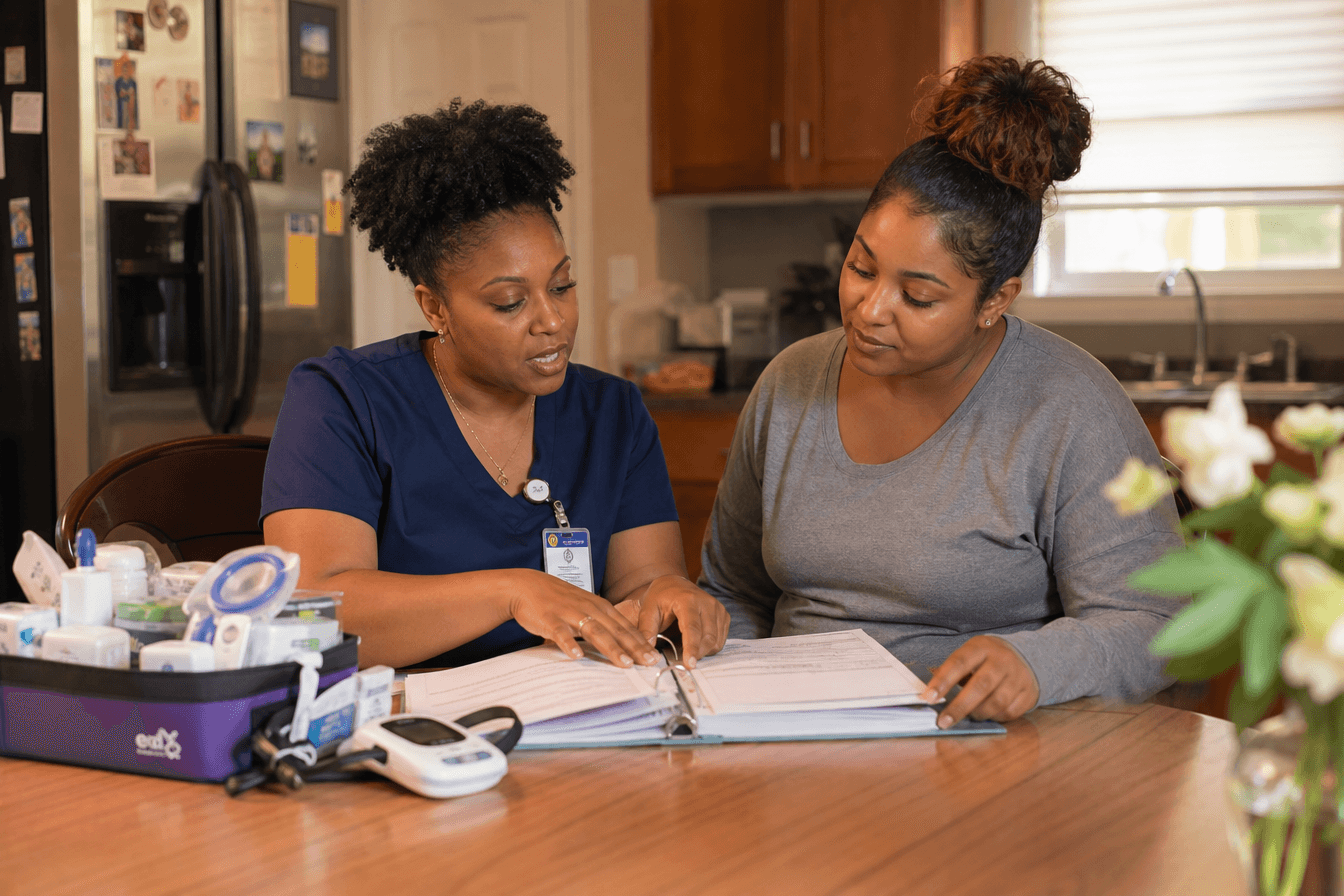
Before any nursing hours begin, your provider will set up an initial home visit with a clinical supervisor — usually an RN. This isn't a care day. It's an assessment.
During this visit you can expect:
- A full review of your child's plan of care, written by your child's physician
- A walkthrough of medications, equipment, and daily routines
- A safety check of the home environment (outlets near medical devices, oxygen storage, emergency exits)
- Introductions to the staffing coordinator who will match nurses to your case
Bring questions. Bring a notebook. The supervisor's job is to make sure nothing is left to guess on the first real shift.
Understanding Your Child's Hours
Under GAPP, the number of approved nursing hours is set by your child's individual assessment, not by a flat formula. Two children with similar diagnoses can have very different schedules depending on:
- Acuity (how much continuous skilled intervention is needed)
- Caregiver availability (work schedules, other children at home)
- Equipment dependence (ventilator, tracheostomy, continuous feeds)
- Behavioral or developmental needs documented by the physician
Some families receive shift care — eight, twelve, or sixteen hours a day. Others receive continuous skilled nursing of up to 24 hours, especially for ventilator-dependent children. The hours are reviewed periodically and can change as your child's needs change.
One of the most common questions we hear is, "Will the hours stay the same forever?" They won't — and that's a good thing. The plan is meant to flex as your child grows.
Who Will Be in Your Home
You won't have just one nurse. Most cases are staffed by a small primary team — typically a lead nurse plus two or three regulars who rotate to cover the schedule. This is intentional. It builds continuity for your child while making sure you're never left without coverage when someone is sick or on vacation.
Your team may include:
- Registered Nurses (RNs) — for higher-acuity cases, complex medications, and clinical decision-making
- Licensed Practical Nurses (LPNs) — for stable cases that still require skilled interventions
- A Clinical Supervisor — an RN who oversees the case, conducts home visits, and adjusts the plan as needed
- A Staffing Coordinator — your day-to-day point of contact for schedule changes
It's normal — and encouraged — to give feedback about which nurses are the best fit. Your child's comfort and your trust in the team matter.
A Typical Day Once Care Begins
There's no single "typical" day, but here's a realistic shape of one:
- Shift handoff — the incoming nurse reviews notes from the previous shift, checks vitals, and confirms equipment is functioning
- Morning care — bathing, dressing, oral care, medication administration, feeding
- Therapies and activity — many children have school nursing or therapy visits layered on top of GAPP hours
- Afternoon monitoring — vitals, suctioning, repositioning, documentation
- Evening routine — meds, feeds, settling in, equipment checks before the night shift
Documentation runs in the background of everything. Nurses chart vitals, interventions, and your child's responses. That record is what keeps the physician, the supervisor, and you all on the same page.

The Adjustment Period Is Real
Even families who fought hard for these hours often feel a quiet weirdness in the first week. A stranger is sitting in your kitchen at 7am. You can hear pumps and monitors from the next room. Your privacy looks different.
A few things tend to help:
- Define "the nurse zone" — a clear space where supplies, charting, and equipment live so the rest of the home stays yours
- Write down what matters to you — preferred names, mealtime norms, religious observances, pets, who's allowed to enter the home
- Talk to the supervisor early — small mismatches (a nurse who runs cold, one who plays the TV too loud) are easy to fix in week one and harder in month three
- Take the break — the hours exist so you can sleep, work, parent your other children, or just sit down. Use them.
Most families tell us the strangeness fades within two to four weeks. After that, the nurses become a known, trusted part of the household.

Where the Care Plan Comes From
Your child's plan of care is a written document signed by their physician. It lists every medication, every procedure the nurse is permitted to perform, the frequency of vitals, when to call the doctor, and when to call 911. Nurses are bound by it — they can't add or skip interventions on their own.
If something in the plan stops fitting (a medication change, a new feeding schedule, a hospital stay that altered baseline), the supervisor coordinates with the physician to update it. Always tell your nurse about doctor's appointments and discharge papers — those are the moments the plan most often needs to change.
How GAPP Fits Alongside Other Supports
GAPP doesn't have to stand alone. Many families layer it with other programs depending on the child's needs:
- NOW or COMP waivers for children with intellectual or developmental disabilities (typically transitions in as the child ages out of GAPP)
- ICWP for older youth and adults with physical disabilities or traumatic brain injuries
- School-based nursing for in-classroom support during the day
- Durable medical equipment (DME) suppliers for the pumps, monitors, and supplies themselves
Your care coordinator can help map out which programs your child qualifies for now, and which ones to plan for as they grow.
When to Speak Up
Trust your gut as a parent. If something feels off — a nurse seems disengaged, documentation isn't accurate, your child reacts negatively to a specific staff member — tell your supervisor. A good provider treats parent feedback as clinical information, not as a complaint. Adjusting the team is normal and expected.
You should also reach out anytime you notice:
- Changes in your child's baseline (new symptoms, weight changes, sleep changes)
- Equipment that isn't working reliably
- Gaps in coverage that make it hard to leave the house or work
- Anything in the plan of care that doesn't match what your child's doctor said
Bringing Care Home Is a Process
In-home skilled nursing isn't a service you order on a Monday and feel settled in by Friday. It's a relationship that takes a few weeks to find its shape — and then becomes one of the steadiest things in your family's life.
Whether you're just starting the application or your first nurse arrives next week, you don't have to figure it out alone. Our team works with Georgia families every day to make in-home nursing feel less like a clinical visit and more like home.
Ready to Get Started?
Contact Heart and Soul Healthcare today to learn how our programs can support you or your loved one.
Related Articles
Continue reading about GAPP