Transitioning from Hospital to Home: A Guide for Families
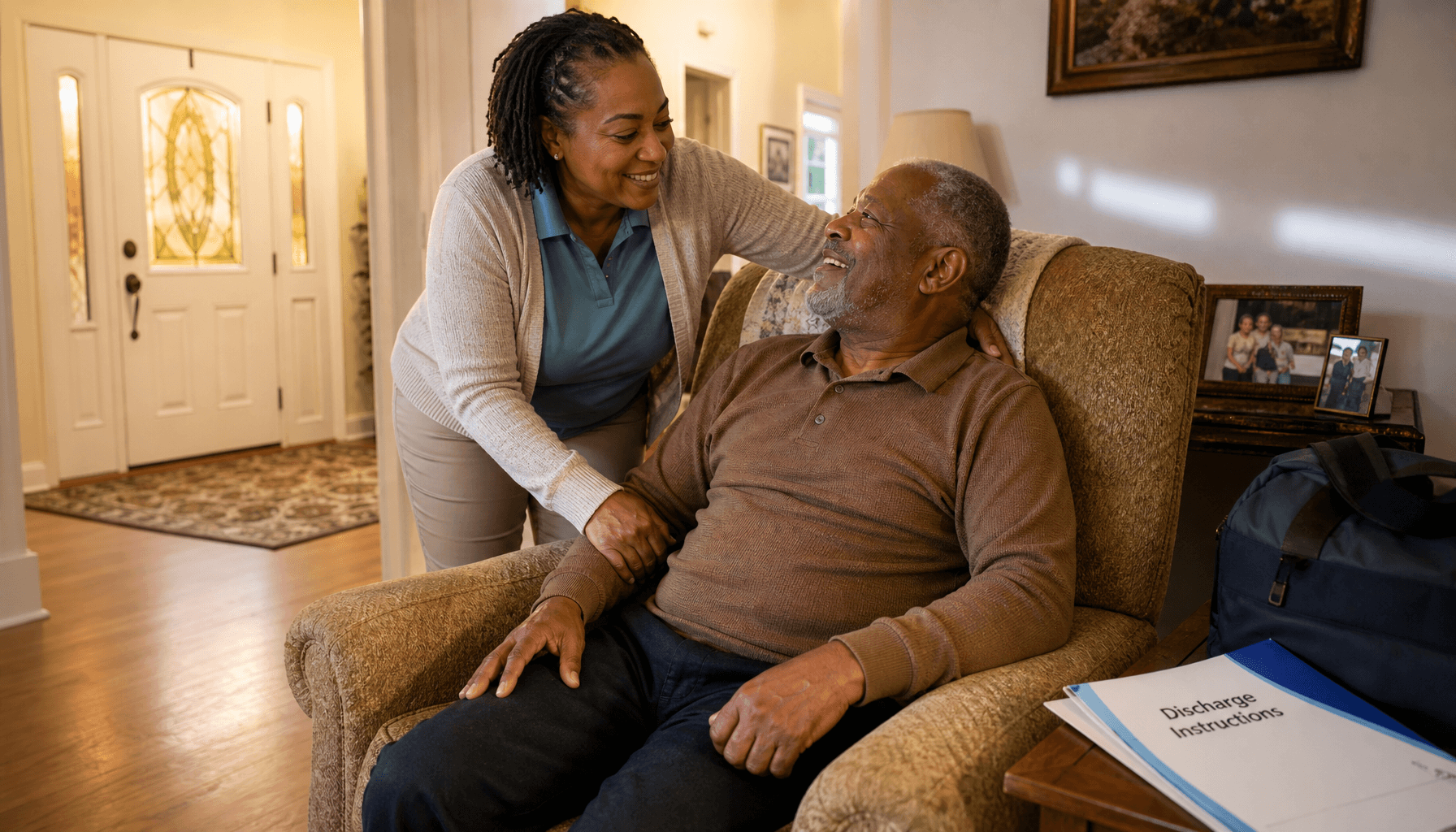
The hospital stay has a rhythm to it. Nurses down the hall, a call button within reach, someone checking vitals through the night. Then a doctor says the word "discharge," and within a few hours your family is in the parking lot with a folder of paperwork, three new prescriptions, and a loved one who is better than they were but nowhere near back to normal.
That gap is where families get caught off guard. Nearly one in five Medicare patients returns to the hospital within thirty days, often for preventable reasons: medication mix-ups, a missed follow-up, a home that simply wasn't ready. A transition you plan for looks very different from one that happens to you.
Discharge Planning Starts on Day One
The most common mistake is waiting for the hospital to raise the subject. Planning is supposed to begin close to admission, and every hospital has a discharge planner or case manager. Ask for that person by name in the first day or two.
Come with an honest picture of home. Not the version where everyone pitches in, but the real one: who lives there, who works, who can lift, who can be there at 2 a.m. A discharge plan built on optimism falls apart in a week.
What Georgia Law Gives You
Georgia families have specific legal footing here. The Georgia Caregivers Act, in effect since July 2022, requires hospitals to:
- Give the patient a chance to name a lay caregiver in the record at admission.
- Notify that caregiver before the patient is discharged or transferred.
- Provide live instruction and training on the medical tasks you'll be doing at home, such as managing medications, giving injections, changing dressings, or transferring someone from bed to chair.
That last one matters more than it sounds. You're entitled to a demonstration and a chance to practice, not a photocopied handout. If something you're being asked to do at home makes you nervous, say so and ask to be walked through it before you leave the building.

Questions Worth Asking Before You Leave
Bring these to the discharge planner. Vague answers now become emergencies later.
- What changed about the medications? Ask for a list showing what's new, what stopped, and what the dose is now.
- What signs mean "call the doctor," and what means "call 911"? Ask for both in writing, specific to this condition.
- Who do we call after hours? Get a real number for nights and weekends.
- Are the follow-up appointments already scheduled? If they aren't on the calendar before you leave, they often never happen.
- What equipment is coming, and when? Beds, oxygen, walkers, and shower chairs need to arrive before the patient does.
- What help is ordered at home, and who provides it? "Home health" can mean a nurse twice a week or hands-on personal care every day. Know which.
If you take one thing from this list, make it the medication review. Sit down with a nurse, open the bottles you already have at home, and go through them one by one against the discharge list. Many readmissions that start as "he just seemed confused" begin here.
Getting the House Ready
Someone who left walking may come back using a walker, on oxygen, or unable to climb stairs. A short prep visit beats a week of adjusting afterward.
- Clear a wide, unobstructed path from the car to a chair to the bathroom. Roll up throw rugs and move cords and low furniture out of the way.
- Set up sleeping space on the main floor if stairs are now a problem, even temporarily.
- Add grab bars, a raised toilet seat, and a shower chair in the bathroom, where most home falls happen.
- Create one command center: the medication list, discharge paperwork, pharmacy and doctor numbers, and a notebook for symptoms and questions.
- Stock easy food for the first week. Nobody wants to plan meals on day two.

The First Week Deserves the Most Attention
These are the highest-risk days, and usually the ones families feel most alone. A few habits help:
- Keep a simple daily log. Medications, meals, fluids, temperature, pain, sleep. Patterns show up in writing that nobody notices in the moment.
- Go to the follow-up visit even if things seem fine. That's where dosing gets corrected before it becomes a problem.
- Expect a step backward. Fatigue, appetite loss, and low mood are common early on. Knowing that keeps a normal dip from becoming a panicked ER trip.
- Watch the caregiver too. Burnout in week one isn't a character flaw. It's a staffing problem, and it can be solved.
Help Paying for Care at Home in Georgia
Ongoing support at home is often fundable, not something you must pay for out of pocket or provide entirely yourself. Georgia's Medicaid waiver programs exist for this situation, and eligibility is worth checking even if you assume the answer is no.
- The Elderly and Disabled Waiver Program (EDWP), delivered through CCSP and SOURCE, supports older adults who would otherwise need nursing-facility care but want to stay home.
- The Independent Care Waiver Program (ICWP) serves adults with severe physical disabilities or traumatic brain injury, funding personal support, skilled nursing, and home modifications.
- The NOW and COMP waivers fund community-based services for people with intellectual and developmental disabilities, including respite for family caregivers.
- If the person coming home is a medically fragile child, the Georgia Pediatric Program (GAPP) provides in-home skilled nursing.
There's also a program built specifically for institutional transitions. Georgia Money Follows the Person helps people move out of nursing homes, hospitals, and other long-term care facilities into their own homes, using the waivers above with added support during that first year in the community. If your loved one has been in a facility and wants to come home, ask the discharge planner about it by name.

If You Think the Discharge Is Too Soon
Families are allowed to push back, and many don't realize it. Medicare patients receive a notice called "An Important Message from Medicare" explaining the right to a fast appeal when a discharge feels unsafe. In Georgia, that appeal goes to Acentra Health, the organization that reviews these cases for Medicare beneficiaries. While a fast appeal is under review, the patient generally does not have to leave and is not responsible for the cost of those extra days.
Short of a formal appeal, you can request a care conference or a social work consult, or ask that the plan be revised because home can't support it as written. Say it plainly: "We can't safely manage this yet, and here's why."
You Don't Have to Figure This Out Alone
The transition home is one of the hardest stretches in a caregiving journey, and it arrives when everyone is most exhausted. It's also one of the most fixable. A plan made three days early, a nurse scheduled for the first week, a grab bar installed before the car pulls in: small things, done in advance, that keep a hospital stay from becoming a cycle.
If you're staring at a discharge date and unsure what comes next, ask the case manager what home health services have been ordered, then find out which Georgia programs your loved one may qualify for. Support at home is closer than most families expect, and it works best arranged before you need it.
Ready to Get Started?
Contact Heart and Soul Healthcare today to learn how our programs can support you or your loved one.
Related Articles
Continue reading about Caregiver Resources