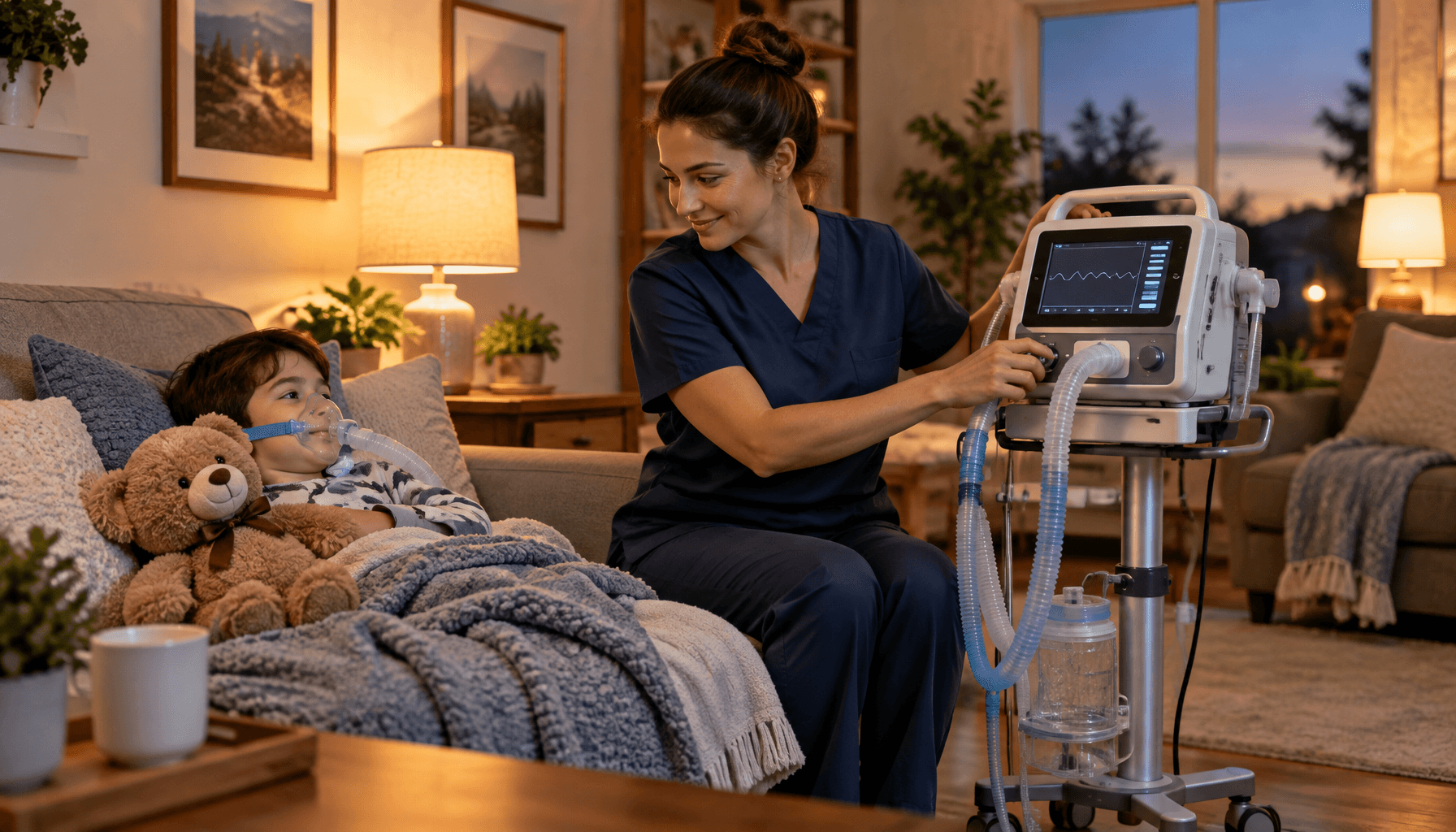
Feeding Tube Care at Home: A Georgia Parent's Guide to G-Tubes, Daily Care, and GAPP Nursing

The hospital sends you home with a binder, a box of syringes, a feeding pump, and a child who now eats through a small button on their belly. The nurses made it look easy. At 2 a.m., with a pump alarm sounding and a wet shirt, it does not feel easy at all.
If that is where you are, take a breath. Thousands of Georgia families care for a child with a gastrostomy tube at home, and most of them felt exactly this way in the first month. This guide walks through what daily care actually involves, which problems are routine and which are urgent, and how the Georgia Pediatric Program (GAPP) can put a trained nurse in your home to share the load.
Why Children Need a Feeding Tube
A gastrostomy tube, or G-tube, is placed through the wall of the belly directly into the stomach during a short surgery. Many children have a low-profile "button" that sits nearly flush with the skin, with extension tubing that attaches only during feedings. Inside the stomach, a small water-filled balloon holds the tube in place.
Children get a G-tube for many reasons: a neurological condition that makes swallowing unsafe, prematurity, a heart or digestive condition that burns more calories than a child can take by mouth, or a risk of food going into the lungs. The tube delivers formula, water, and medicines safely, and it can also vent the stomach when gas or fluid builds up.
A feeding tube is not a sign that something went wrong. For many children it is the thing that finally lets them grow, sleep, and have the energy to play.
The First Weeks at Home
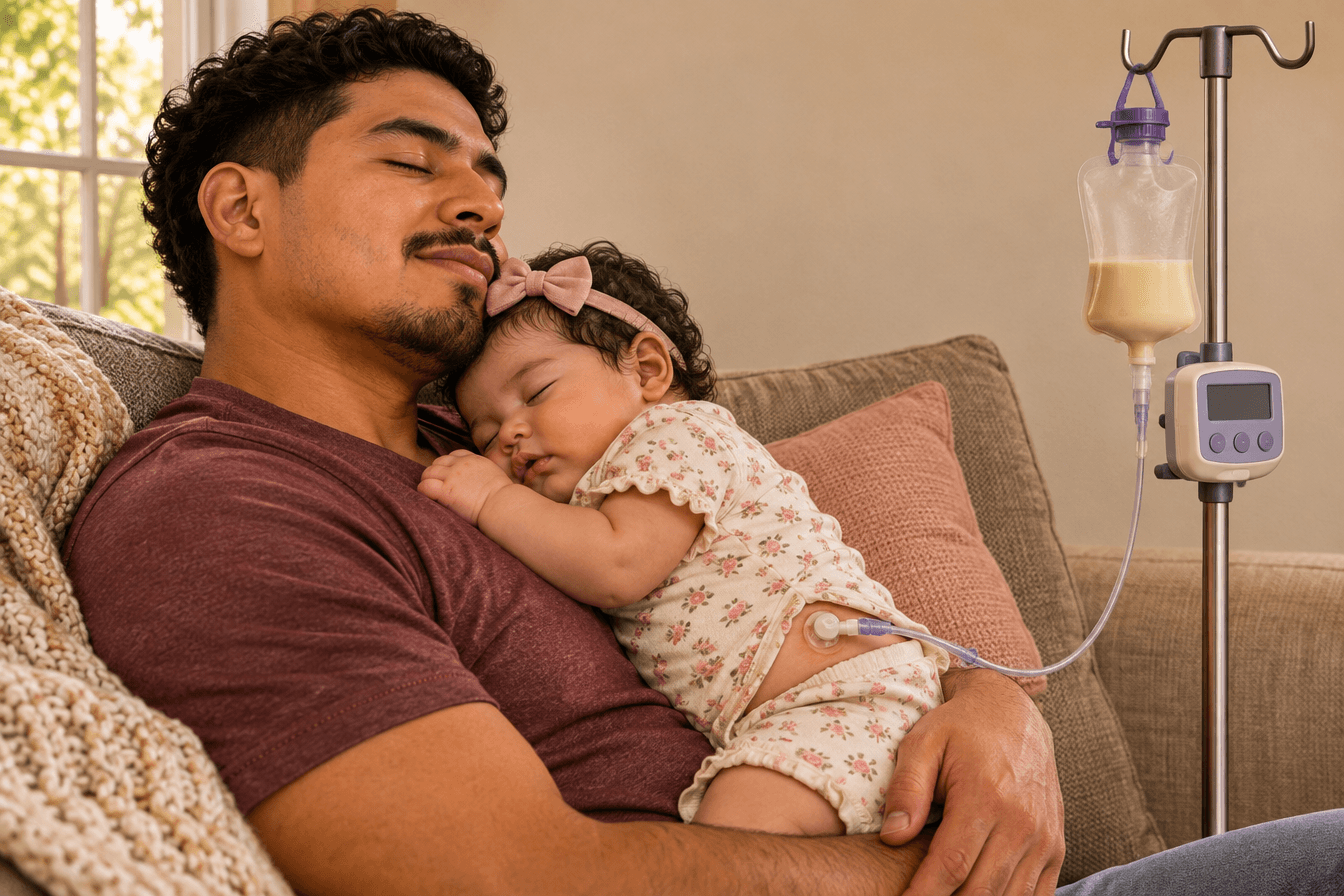
The opening in the belly, called the stoma, needs 8 to 10 weeks to heal fully. During that window the tube is still settling, so protecting it matters most:
- Keep the tube covered. One-piece snap shirts work best for babies and toddlers. Do not let the tube or extension tubing dangle.
- Disconnect extension tubing when it is not in use. This prevents accidental tugs and reduces the raised, reddish tissue that can form around the site.
- Expect the first tube change at the follow-up visit. Most families are taught to replace the tube at the 8 to 10 week appointment. After that, the tube is changed every 3 to 5 months, or sooner if it comes out.
- Write down the essentials. Keep your child's surgeon, gastroenterologist, and medical supply company on one card, along with the exact tube type and size. You will need that size if the tube ever has to be replaced in a hurry.
Daily Care That Keeps the Site Healthy
Skin Care
Clean and check the skin around the tube every day. Remove any tape or dressing first, wash away crusted material with soap and water (a cotton swab helps under the button), rinse with warm water, and pat dry. You can leave the site open to air or tuck a piece of split gauze around it to keep the skin dry. Never leave a wet dressing in place, because stomach acid can burn the skin. Rotate the tube only as your care team showed you.
Flushing
Flushing means slowly pushing water through the tube with a syringe. Your team will tell you how much water to use and when, but flushing after every feeding and every medicine is standard. Even if your child is not using the tube for a stretch, flush it at least every 8 hours so bacteria cannot build up inside. Wash the syringe in warm soapy water afterward and let it dry.
Medicines
Always ask the pharmacist which medicines can be crushed and which can be mixed. Never put medicine into the formula bag. If your child does not finish the feeding, they do not get the full dose. Give each medicine with its own syringe, then flush with water so none of it is left sitting in the tube.
Three Ways to Feed
Your child's team will choose a feeding method, and it may change over time:
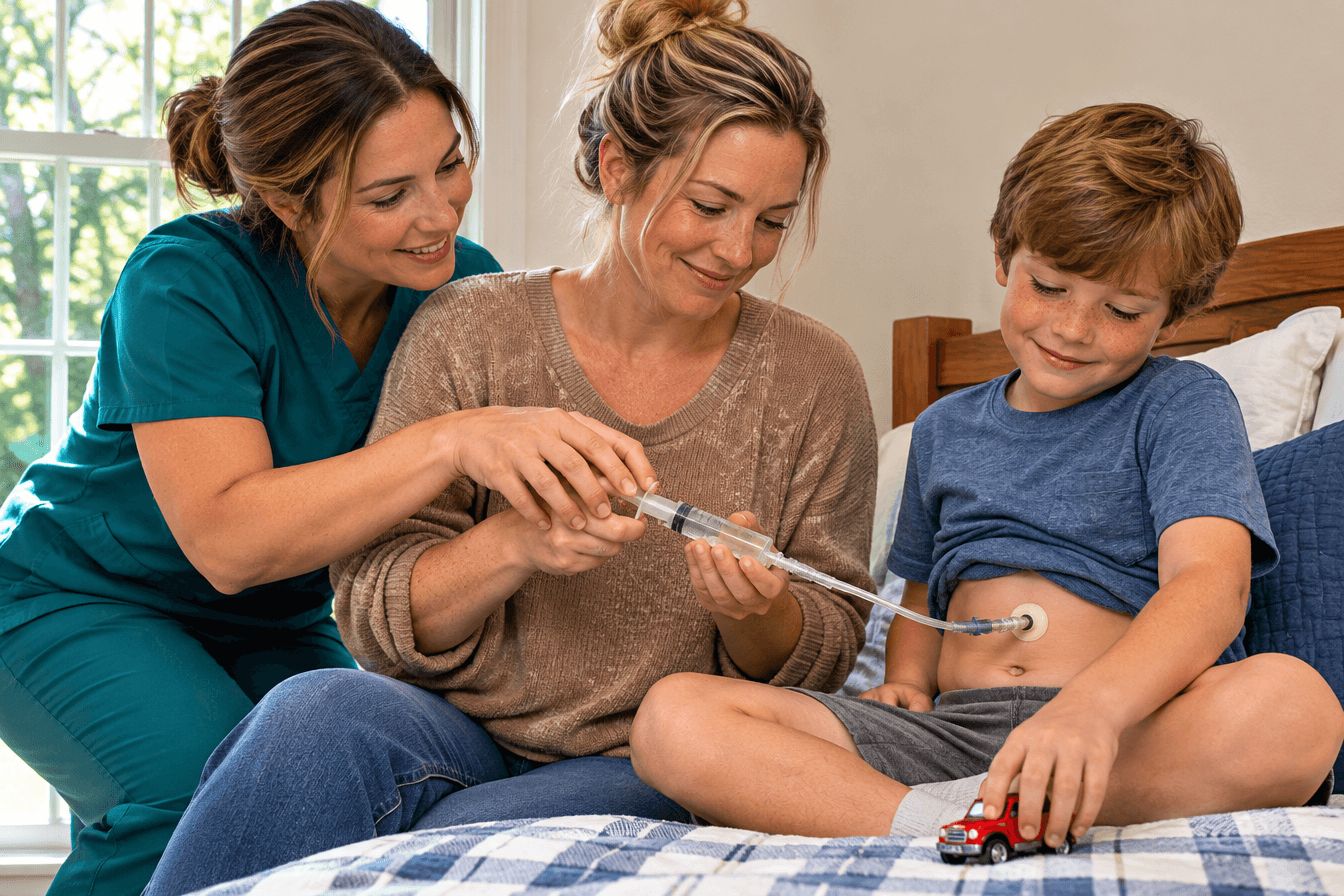
- Bolus feeds. A set amount of formula goes in over a short period, several times a day, much like a mealtime.
- Continuous feeds. A pump delivers formula at a steady rate over many hours, often overnight.
- Gravity feeds. Formula is poured into an open syringe and flows in on its own.
Whatever the method, the schedule should fit your family's life. If feeding times are keeping everyone awake or making school and work impossible, say so at the next appointment. Schedules can be adjusted.
Problems to Watch For, and When to Call
Most tube problems are routine and fixable at home. A few are not. Use this as your reference:
- Redness, warmth, swelling, or green or white drainage at the site. Clean as you were taught, then call the doctor. This can be an infection.
- Clear or mucus-like leaking. Call the doctor. The tube may be the wrong size or the balloon may be low on water.
- Extra pink tissue growing around the site. Keep it clean and dry and call the doctor. This is granulation tissue, and it is treatable.
- A clogged tube. Slowly push warm water in with a 10 mL syringe, using a gentle push-and-pull motion. Never force an object into the tube. If it will not clear, call the doctor.
- Vomiting or a bloated belly during feeds. Stop the feeding and call. If the tube has shifted, your child may need an X-ray.
- Fever of 100.4°F or higher. Call the doctor.
- The tube comes out. Go to the emergency department right away unless you have been taught to replace it. The stoma can begin to narrow within hours, so do not wait until morning.
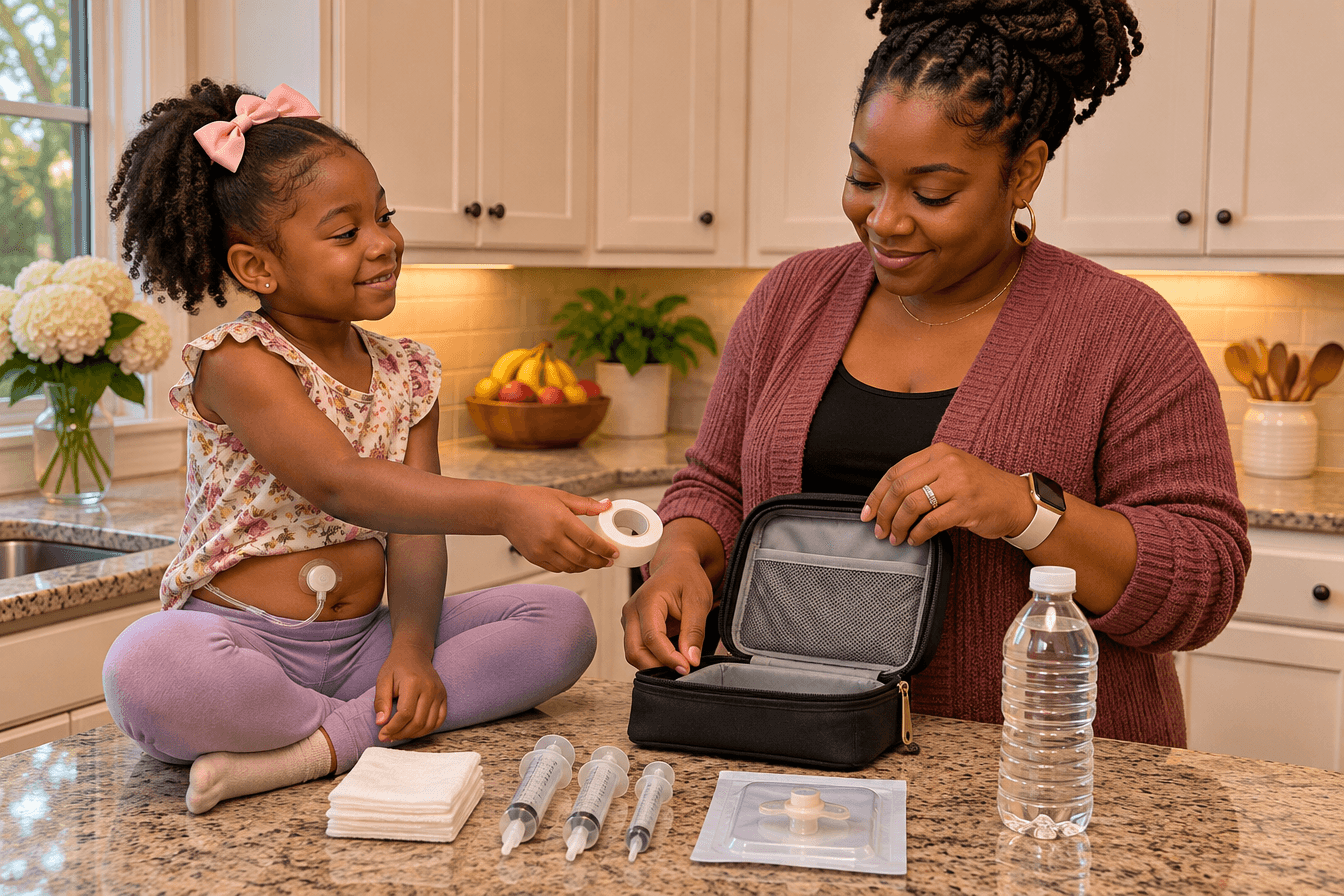
Keep a spare tube of the correct size, a syringe, water-based lubricant, and gauze in a bag that goes everywhere your child goes. A tube that comes out at the park is an inconvenience if you are prepared and an emergency if you are not.
How GAPP Nursing Helps a Child With a Feeding Tube
Caring for a G-tube is learnable, but it is also relentless. Overnight continuous feeds mean pump alarms at 3 a.m. Bolus feeds mean stopping four or five times a day. Add seizures, reflux, a tracheostomy, or a child who cannot tell you something is wrong, and a parent is doing skilled nursing around the clock with no relief.
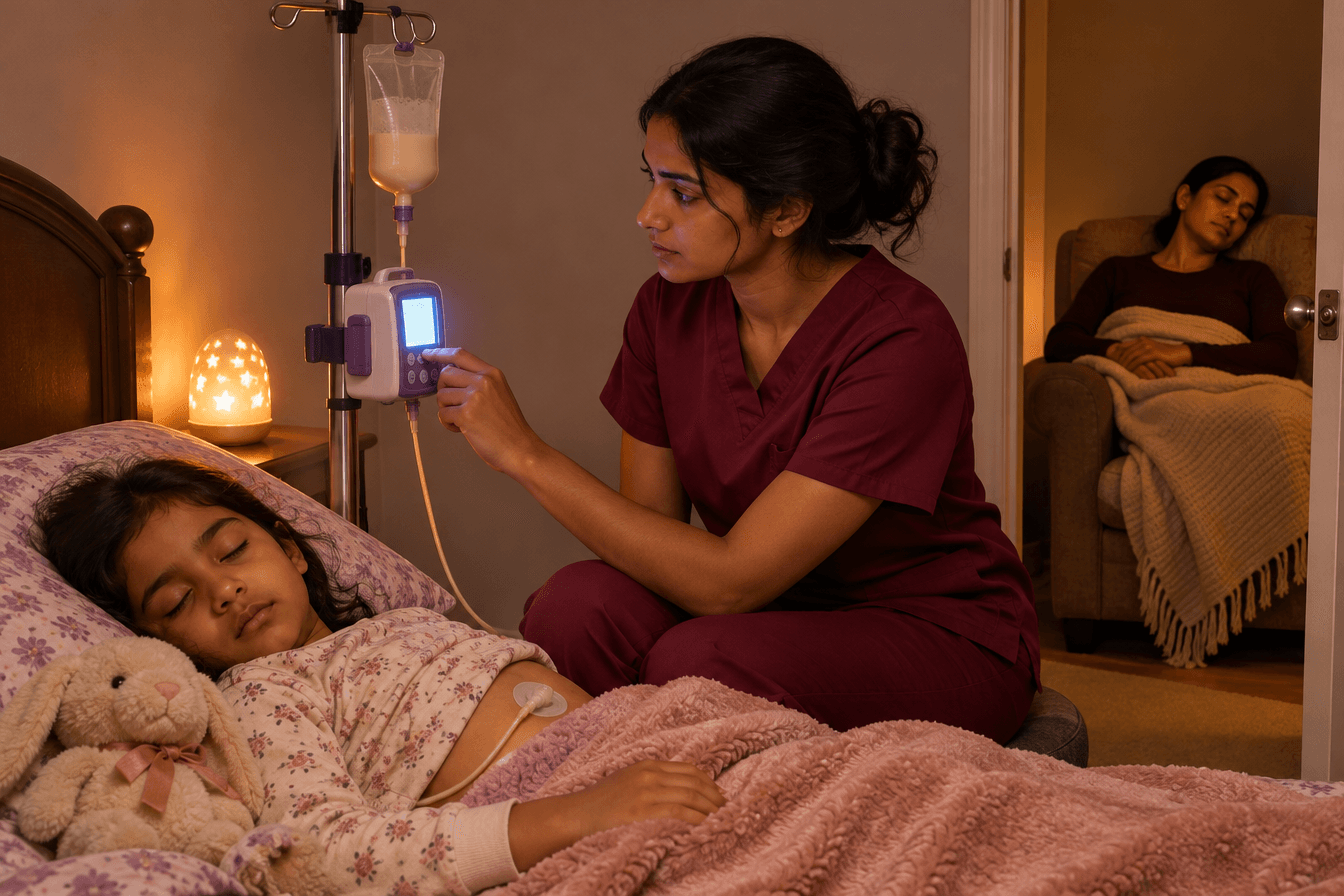
The Georgia Pediatric Program exists for exactly these families. GAPP provides in-home skilled nursing for Medicaid-eligible children under 21 who are medically fragile. In the home, a GAPP nurse can:
- Run feedings and give medicines through the tube on schedule
- Clean and assess the site daily and catch infection or granulation tissue early
- Watch for reflux, vomiting, and signs of aspiration during and after feeds
- Troubleshoot pump alarms and clogged tubes so you are not alone with them
- Document every feeding, flush, and site check so the physician sees the full picture
Hours are approved one child at a time based on medical need. A feeding tube on its own may not qualify a child for many nursing hours, but a feeding tube alongside other skilled needs often does. Our guide to how GAPP decides nursing hours explains what reviewers look for. If your child does not yet have Medicaid, Katie Beckett Medicaid lets children qualify regardless of parent income.
Feeding tubes do not end at 21. Adults with intellectual or developmental disabilities who use a G-tube may receive support through the NOW and COMP waivers, adults with physical disabilities through ICWP, and older adults through EDWP.
You Do Not Have to Do This Alone
The first month with a feeding tube is the hardest. By the third month most parents can flush, feed, and change a dressing in their sleep, sometimes literally. A nurse in the home during those early weeks, and a nurse covering the overnight feeds after that, can be the difference between surviving and actually enjoying your child.
Heart and Soul Healthcare provides GAPP skilled nursing across metro Atlanta. If your child has a feeding tube and you want to find out whether nursing hours are an option, we are glad to walk through it with you.
Ready to Get Started?
Contact Heart and Soul Healthcare today to learn how our programs can support you or your loved one.
Related Articles
Continue reading about GAPP