Bringing Your Child Home With a Trach in Georgia: A Parent's Guide
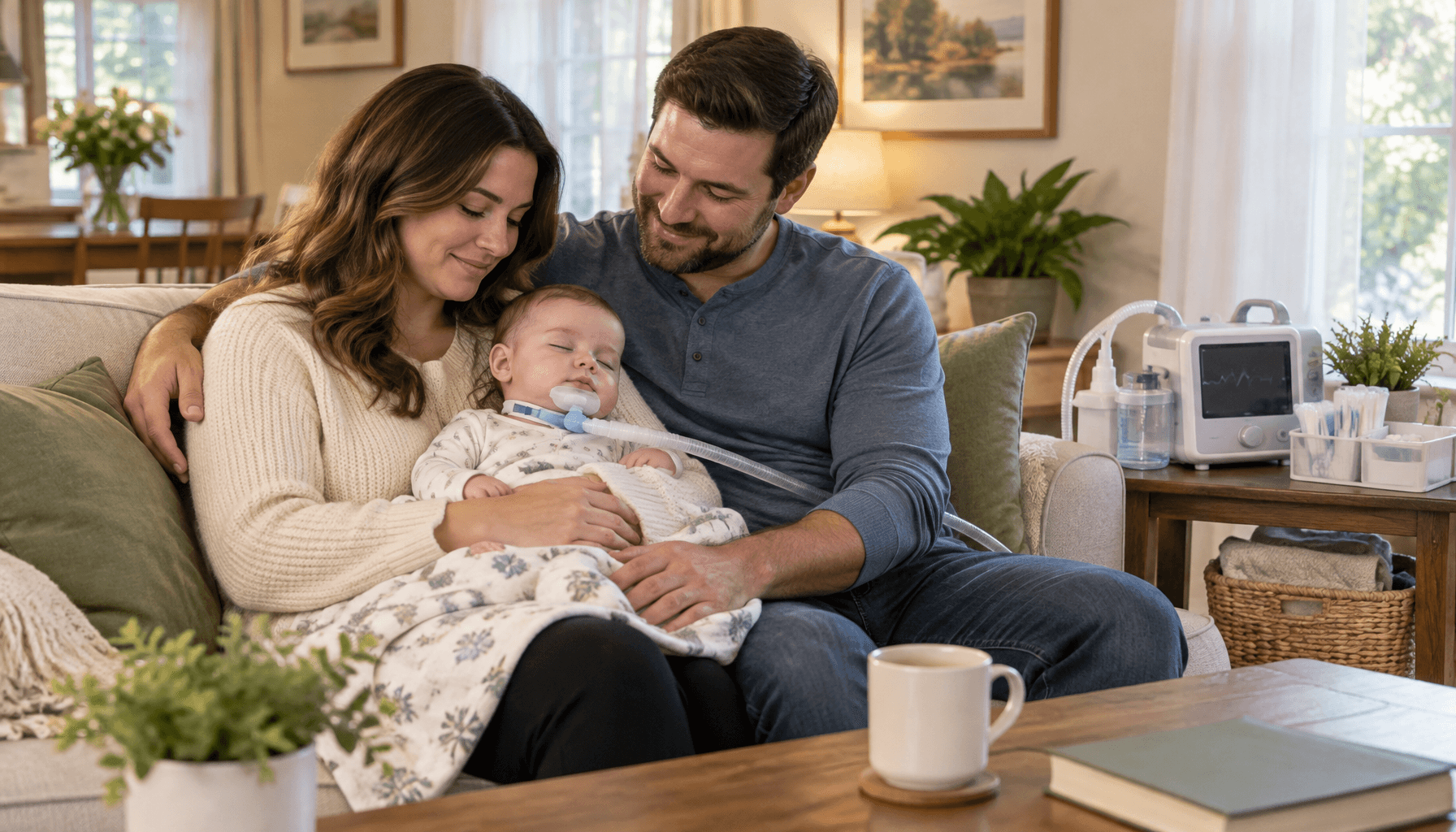
For many families, the trach was the hardest decision of the hospital stay. Then comes the next surprise: your child is ready to come home, and home now needs to work like a small piece of the unit you just left.
That is a lot. It is also very doable. Thousands of children live full lives at home with a tracheostomy, and in Georgia, the Georgia Pediatric Program (GAPP) pays for skilled nurses to help care for them in the home. This guide covers what to put in place before discharge, what the first weeks usually feel like, and where in-home nursing fits.
Before Discharge: The Checklist That Matters Most
Your hospital team will run its own discharge checklist, and you should follow it closely. These are the pieces families most often tell us they wish they had started sooner.
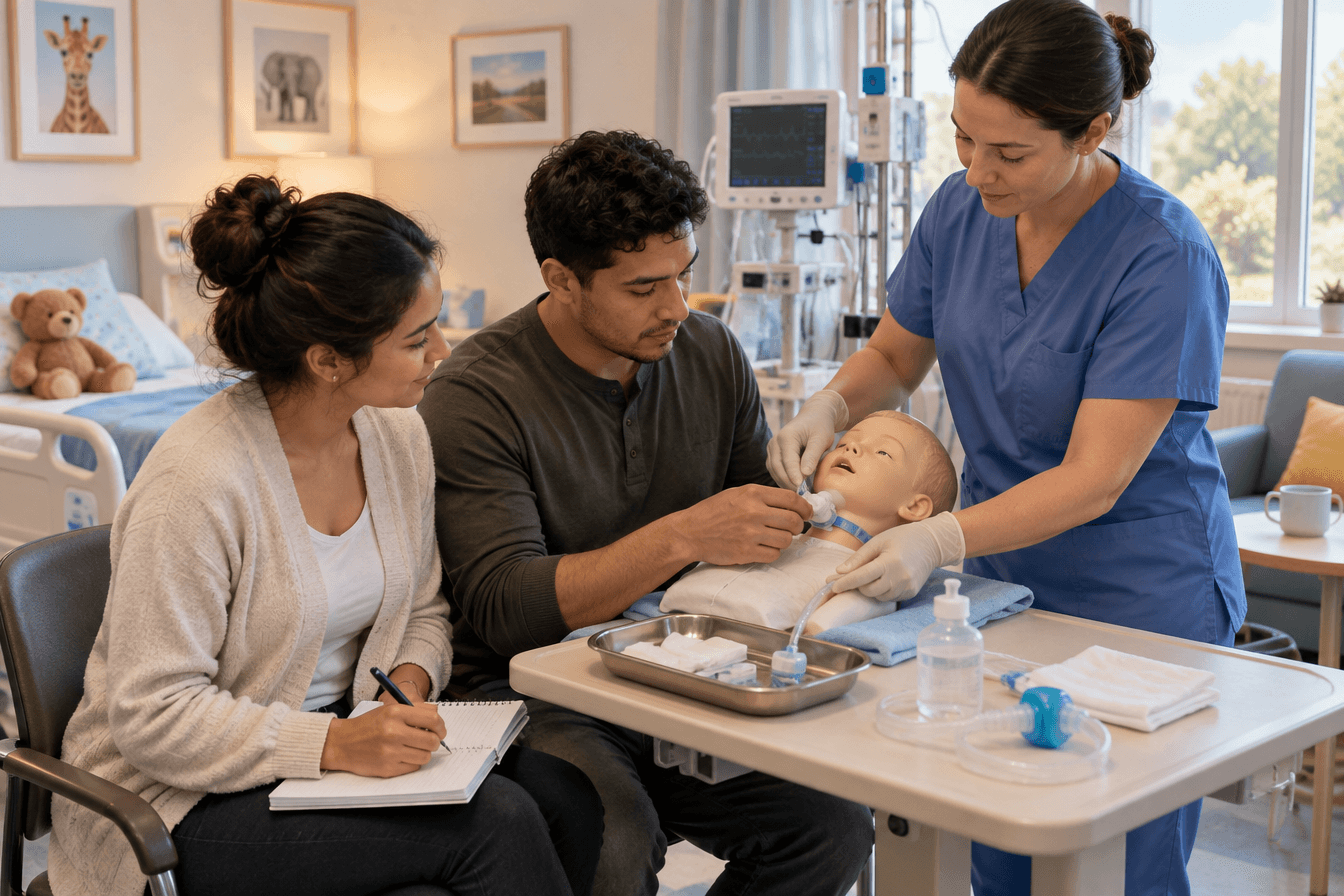
Get trained, and get a second person trained. Before most children go home with a trach, the hospital teaches parents trach care, suctioning, tie changes, and an emergency trach change, and asks you to show you can do them. Ask whether a second adult in the household can train too. Nurses help a great deal, but no nursing schedule covers every hour, and your child is safest when more than one family member knows the airway.
Start the nursing referral early. This is the step families most often leave too late. GAPP nursing has to be requested and approved before shifts begin, and the agency needs time to match trained nurses to your child. A parent, a discharge planner, a case manager, or a physician can start the referral. The earlier we hear from you before discharge, the more time we have to staff your child's shifts.
Confirm equipment and supplies. Your durable medical equipment (DME) company should deliver and set up the suction machine, humidification, pulse oximeter, and any oxygen or ventilator before your child arrives home. Check that you have a spare trach in the size your child uses, plus one size smaller, along with ties, suction catheters, and saline.
Make sure Medicaid is in place. GAPP is a Georgia Medicaid program, so your child must have Medicaid. Many children with complex medical needs qualify through the Katie Beckett pathway, which looks at the child's needs instead of the parents' income. Your hospital social worker can help you apply.
How GAPP Nursing Gets Approved
Here is how the process works under the current GAPP manual, so the timeline does not catch you off guard:
- Your child's physician writes the orders. GAPP requires a Physician Plan of Treatment that lists the skilled nursing your child needs. For a child leaving the hospital, the discharge summary and recent progress notes can also support the request.
- The nursing agency submits the request. The agency gathers the orders and forms and sends a complete packet to the state's medical review team.
- The state reviews it. Reviewers have seven days from a complete packet to decide. Missing paperwork is the most common cause of delay, which is one more reason to start early.
- Care begins. Once your child is approved, services must begin within 60 days, and in practice the goal is nursing in place for the first night home.
The number of hours is set by the reviewers based on your child's medical needs, not by a fixed formula. We explain how that works in our guide to GAPP nursing hours for children with a trach or ventilator.
The First Two Weeks at Home
Most families describe the first weeks as tiring and then, slowly, routine. A few things help:
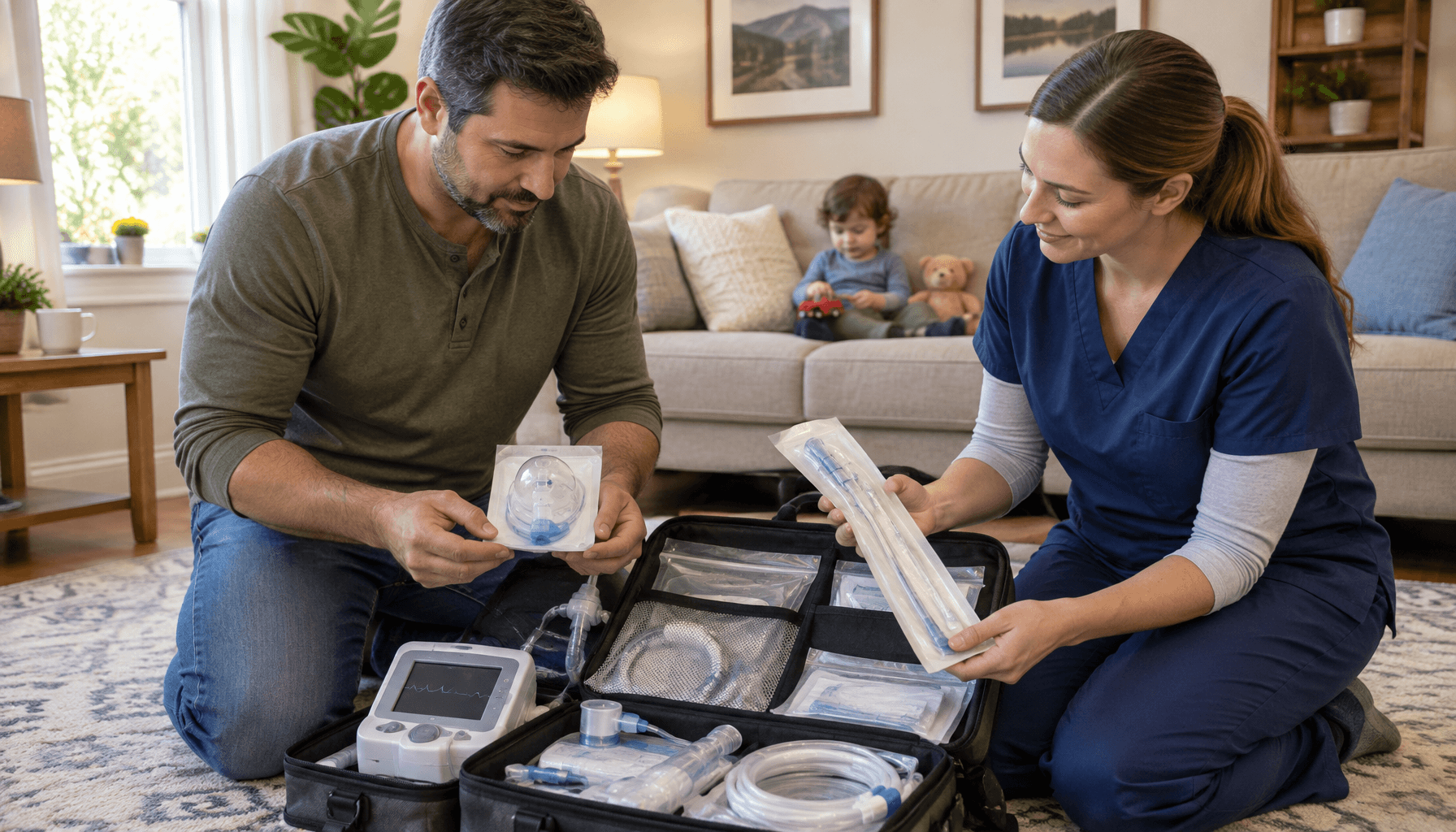
- Set up a care station. Keep suction, the spare trachs, saline, and the pulse oximeter within arm's reach of wherever your child sleeps. Many families keep a second, smaller kit by the door for outings and appointments.
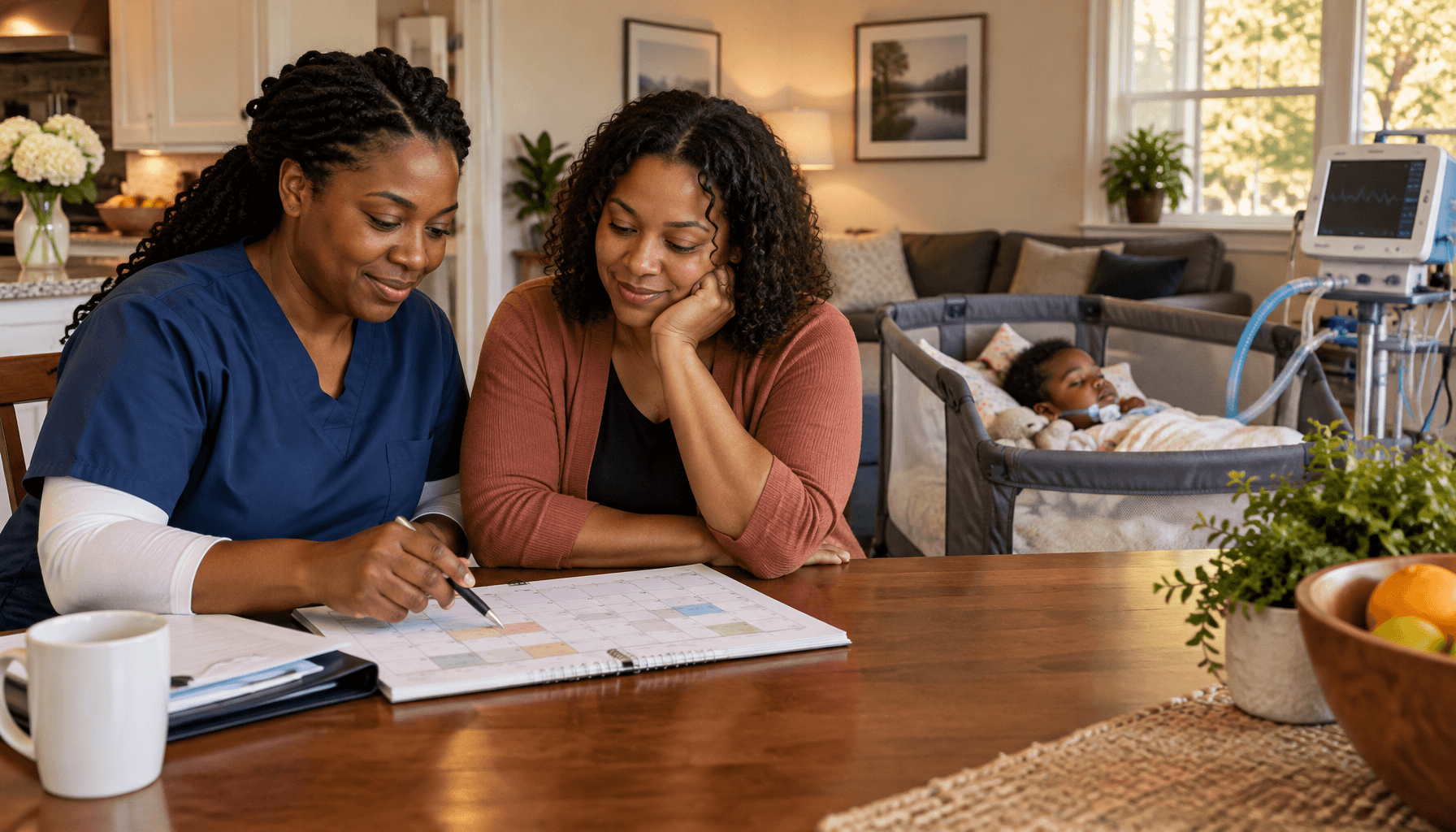
- Keep a simple log. Write down suctioning, secretions, oxygen needs, and anything unusual. Your nurse documents every shift too, and the two together give your child's doctors a clear picture at follow-up visits.
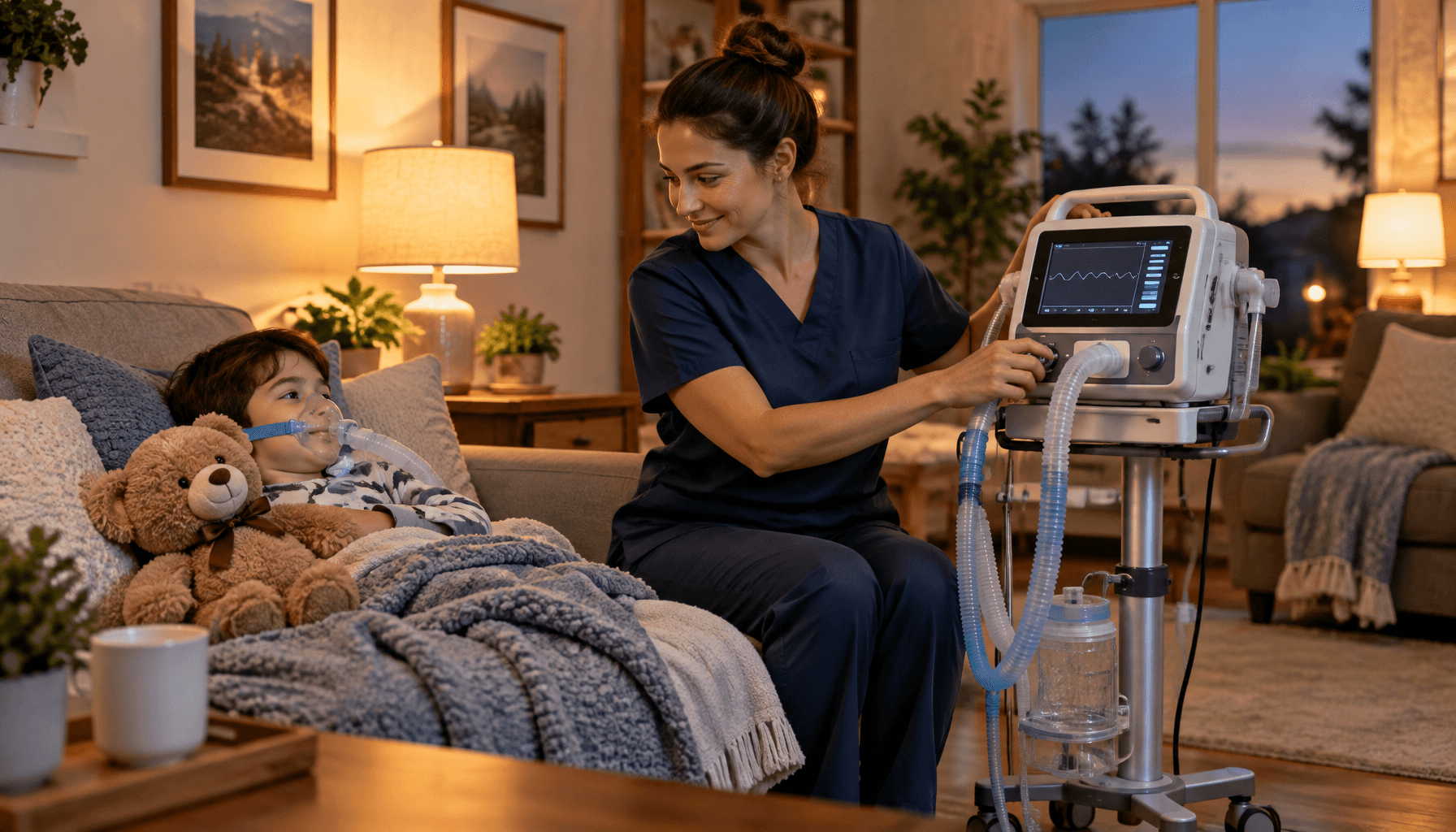
- Let the nurses take the night. If your child is approved for overnight hours, use them to sleep. Exhausted caregivers make mistakes, and rested parents are part of the safety plan. Our post on night nursing for a child with a trach or ventilator covers what those shifts look like.
- Ask questions without apologizing. Your nurse and the supervising registered nurse expect them. There is no such thing as a silly question about an airway.

Planning for the Unexpected
An emergency plan is part of going home with a trach. Your hospital team will help you write one, and your nurses will learn it. We walk through the details in building a trach and ventilator emergency plan at home, but the short version is:
- Know your child's trach size and keep the spare trachs where everyone can find them.
- Post your child's emergency information near the care station.
- Call your power company and ask about registering a household member who depends on medical equipment.
- Keep a go-bag ready for hospital trips.
Can I Be Paid to Do My Child's Trach Care?
Families ask this often, and the answer matters. Under GAPP, a parent who lives with the child can be paid through the Family Caregiver Option only for approved personal care, such as bathing and dressing. Trach care is skilled nursing, which a parent cannot be paid to provide, and the October 2026 GAPP manual requires every child in the program to have medically necessary skilled nursing. A nurse from the agency provides that care.

You Do Not Have to Figure This Out Alone
Heart and Soul Healthcare cares for children with tracheostomies and ventilators today. Our nurses are trained in trach care, suctioning, trach changes, and ventilator management, a registered nurse oversees every child's care, and we work directly with hospital discharge teams.
We currently serve families in Fulton, DeKalb, Cobb, Clayton, Henry, Gwinnett, Fayette, Douglas, Forsyth, and Rockdale counties, along with Cherokee, Paulding, Bartow, Newton, Spalding, Coweta, Carroll, Barrow, Gilmer, and Pickens. If you live elsewhere in Georgia, reach out anyway and we will tell you honestly whether we can staff your child's care.
Learn more about our pediatric trach and ventilator nursing, or start a referral below.
Ready to Get Started?
Contact Heart and Soul Healthcare today to learn how our programs can support you or your loved one.
Related Articles
Continue reading about GAPP