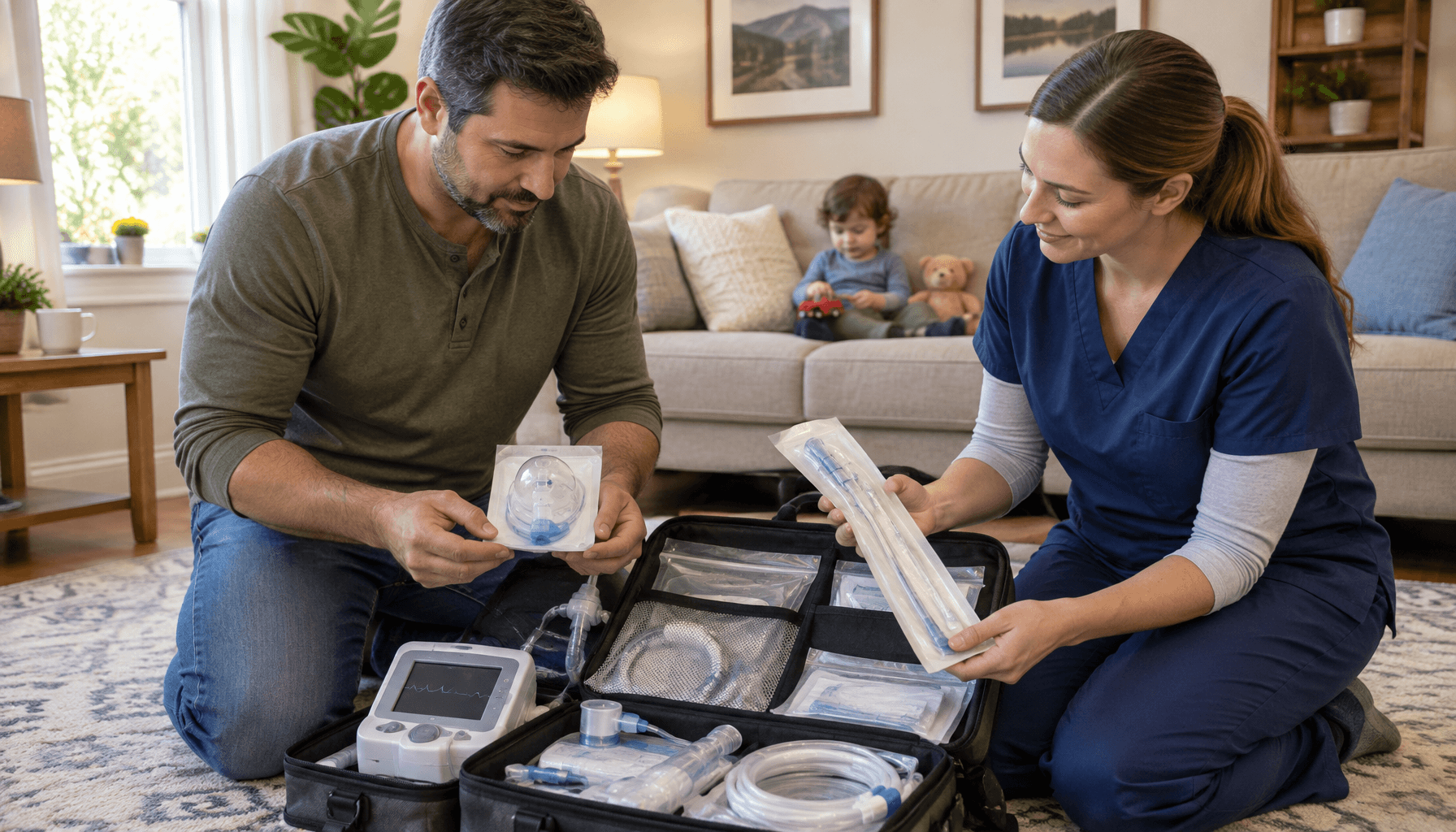
Night Nursing for a Child With a Trach or Ventilator in Georgia
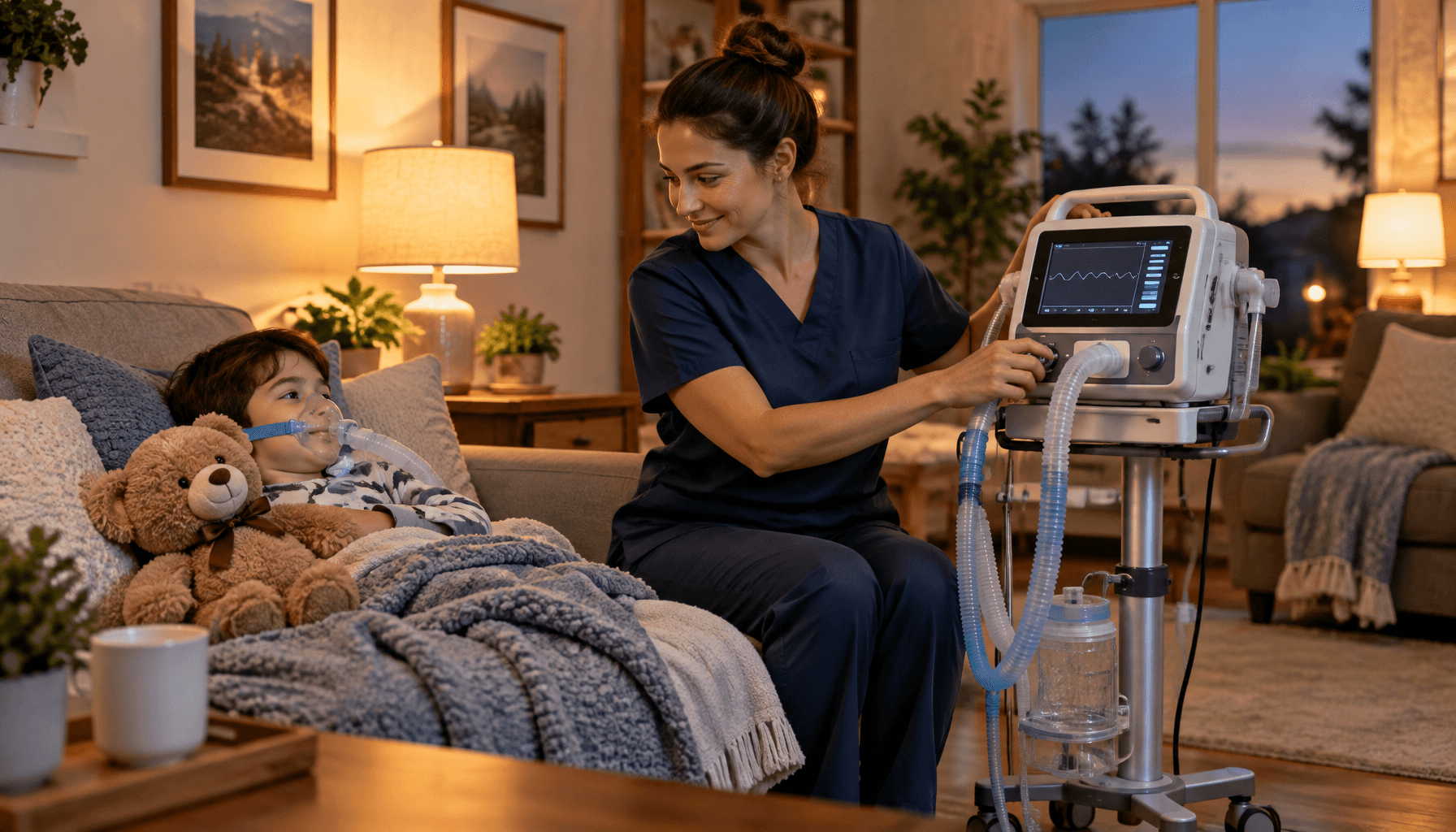
Ask a parent of a child with a trach or ventilator what they need most, and many will say the same thing: sleep.
Nights are hard with an airway. Secretions build up, alarms go off, a trach can plug, and a vent circuit can disconnect. Someone has to be awake and close enough to hear it. When that someone is always a parent, exhaustion builds week after week. Overnight nursing is how many Georgia families get through it, and the Georgia Pediatric Program (GAPP) is how most of them pay for it.
Why Nights Are Often the Priority
GAPP approves nursing hours as a monthly block, and the manual leaves it to parents and the agency to decide together how best to use them. Many families with a trach or vent child put most of those hours overnight, for a few reasons:
- Many children need the ventilator mainly during sleep. Some children are on the vent only at night, so the hours with the most equipment involved are the hours parents would otherwise be asleep.
- Problems are harder to catch when everyone is tired. A plugged trach or a change in breathing needs someone alert, not someone waking up to an alarm after three hours of sleep.
- Rested parents give better care. Parents are part of the care team during the day. They cannot do that safely on broken sleep for months at a time.
Some families split hours between nights and days so a parent can work. There is no single right answer, and the schedule can change as your child grows.
What a Night Nurse Actually Does
A night shift is quiet when it goes well, and that is the point. Here is what our nurses do while your child sleeps:
- Watch the airway. Suctioning when needed, checking the trach and ties, and watching for the early signs of a plug.
- Manage the ventilator. Checking settings against your child's orders, responding to alarms, handling the circuit and humidification, and keeping the backup equipment ready.
- Monitor oxygen and vital signs. Following the pulse oximeter and any oxygen orders, and noticing changes before they become emergencies.
- Handle overnight feeds and medications. Many trach and vent children also have a feeding tube with continuous or scheduled overnight feeds.
- Reposition and keep your child comfortable. Turning, diaper changes, and skin checks.
- Document the night. Clear notes on what happened, so you know at handoff, and so your child's doctors and the GAPP reviewers see the real picture.
- Act on the emergency plan. If something goes wrong, the nurse knows your child's plan, including what to do for an accidental decannulation or equipment failure, and will wake you when the plan calls for it.
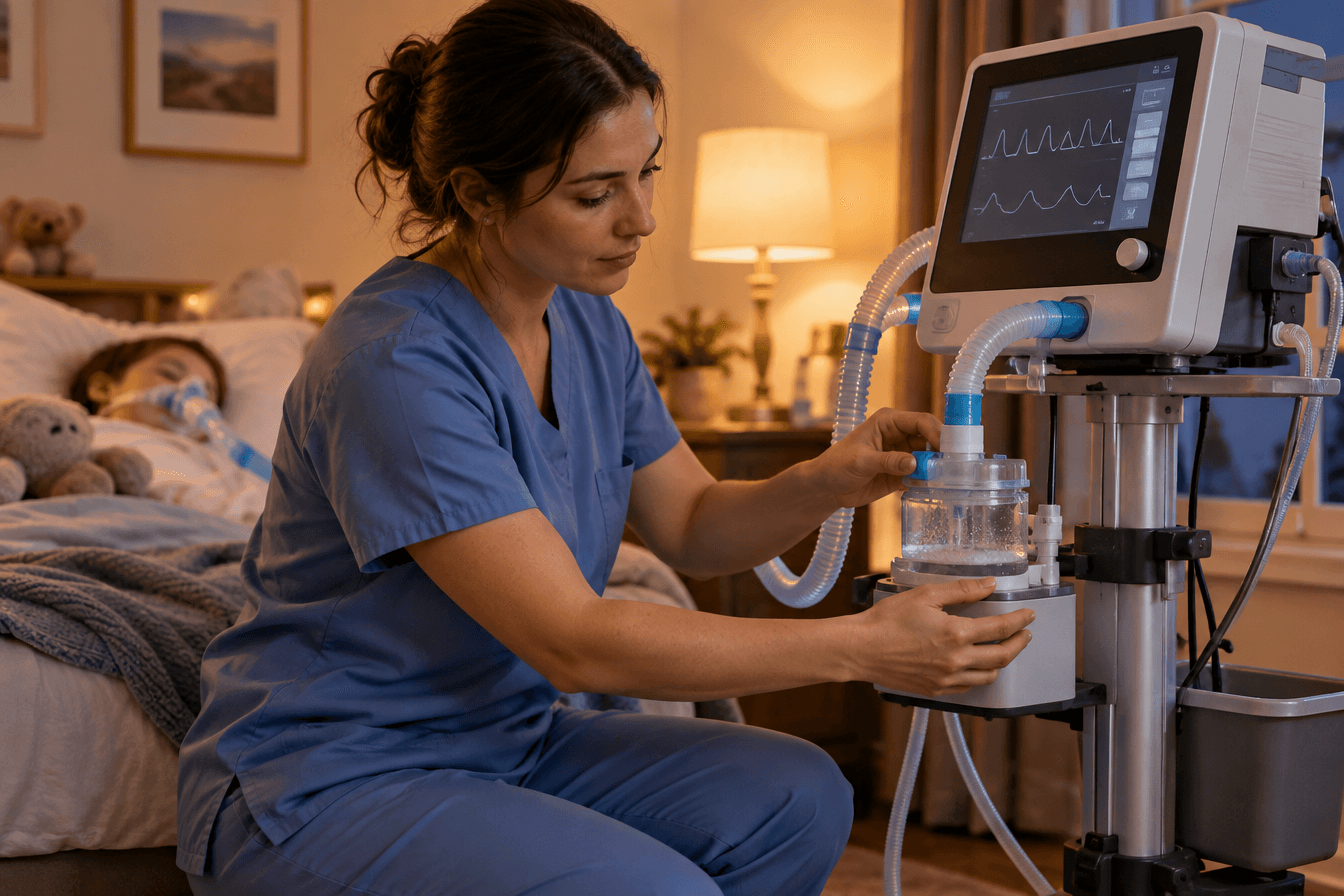
Handoffs Make or Break the Shift
The start and end of each shift are where small problems get caught or missed. A good handoff covers how the day went, any changes in secretions or oxygen needs, medication times, and anything the parent is worried about. In the morning, the nurse reports back on the night.
Ask your nurse to walk you through the night every morning, even if it was uneventful. Over time, those short conversations build the trust that lets you actually sleep.
Finding Night Nurses in Georgia
Overnight trach and vent shifts are some of the hardest to staff, so a few things improve your chances:
- Start before discharge. If your child is still in the NICU or PICU, start the referral now. Approval and staffing take time, and the goal is a nurse for the first night home.
- Ask the right questions. Ask an agency whether it cares for trach and vent children today, how its nurses are trained, who supervises the care, and who answers the phone at 2 a.m. GAPP requires agencies to be reachable 24 hours a day, seven days a week, and to have a plan for back-up staffing coverage.
- Be clear about your schedule. Tell the agency which nights and hours matter most. It helps with matching nurses to your child.
- Expect a small team. Most families have a few regular nurses who rotate. That keeps coverage steady when someone is sick and helps your child get to know their nurses.


Can a Parent Be Paid for Night Shifts?
No. Under GAPP, a parent who lives with the child can be paid only for approved personal care through the Family Caregiver Option. Overnight airway and ventilator care is skilled nursing, which a parent cannot be paid to provide, and every child in GAPP must have skilled nursing from the agency.
Night Nursing From Heart and Soul Healthcare
Heart and Soul Healthcare cares for children with tracheostomies and ventilators today, and our nurses are trained in trach care, suctioning, trach changes, and ventilator management. A registered nurse oversees every child's care, with on-call support when questions come up after hours.
We serve Fulton, DeKalb, Cobb, Clayton, Henry, Gwinnett, Fayette, Douglas, Forsyth, and Rockdale counties, along with Cherokee, Paulding, Bartow, Newton, Spalding, Coweta, Carroll, Barrow, Gilmer, and Pickens. Families elsewhere in Georgia are welcome to reach out, and we will tell you honestly whether we can staff your child's care.
To learn how GAPP decides the number of hours, read our guide to GAPP nursing hours for children with a trach or ventilator. To learn more about our care, visit our pediatric trach and ventilator nursing page, or start a referral below.
Ready to Get Started?
Contact Heart and Soul Healthcare today to learn how our programs can support you or your loved one.
Related Articles
Continue reading about GAPP