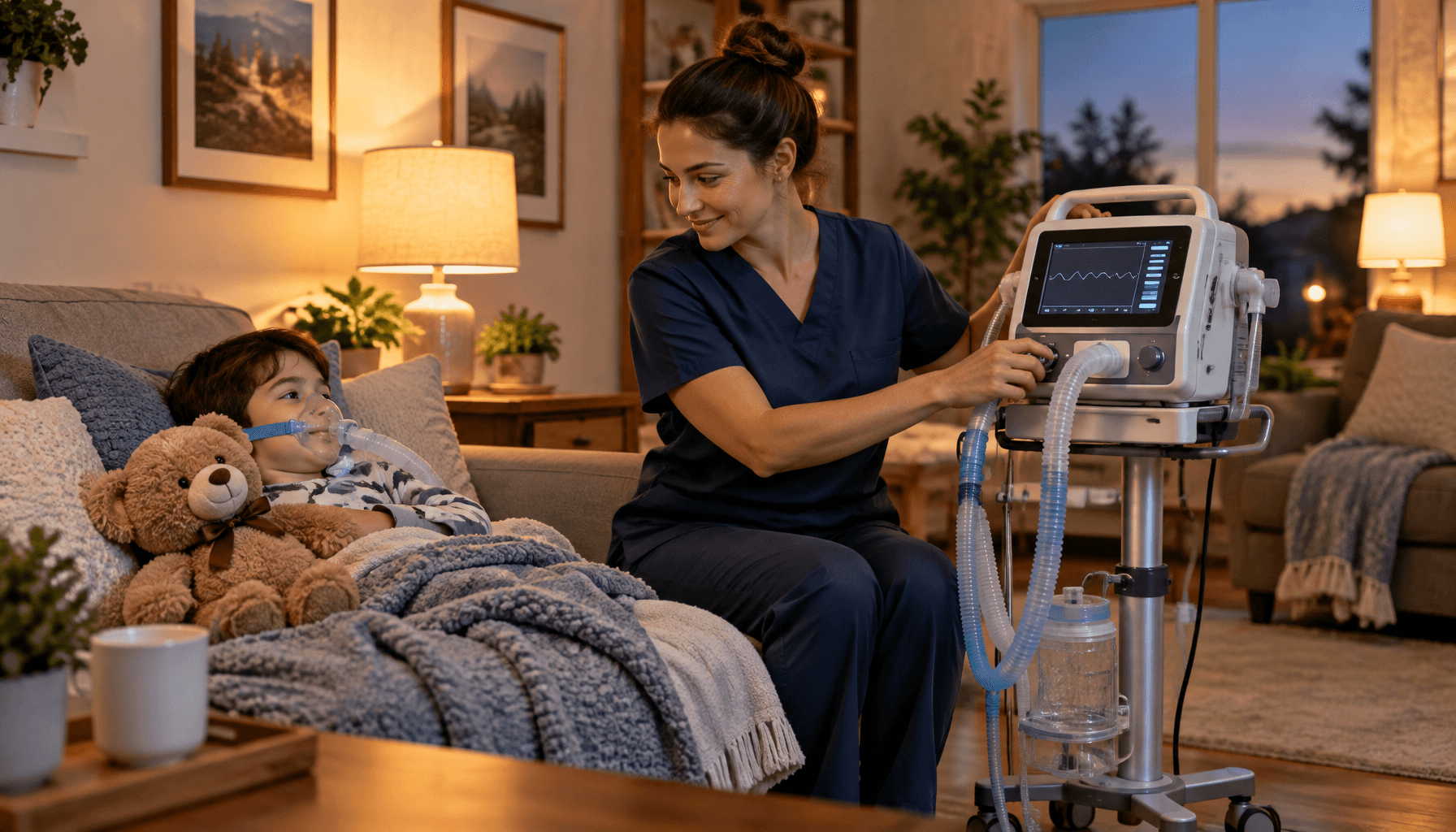
Building a Trach and Ventilator Emergency Plan at Home
Most days with a trach or ventilator are ordinary. The emergency plan is for the few that are not. Writing it down before you need it means that whoever is with your child, whether a parent, a grandparent, or a nurse, can act quickly without having to think it through under pressure.
Your child's hospital team and physician will help you build the medical side of the plan, and their instructions always come first. This guide covers the practical pieces Georgia families tell us they are glad they set up early.
Start With a One-Page Emergency Sheet
Put the essentials on a single page and post it near your child's care station, with a copy in the go-bag. Include:
- Your child's name, date of birth, diagnoses, and allergies
- Trach brand, size, and type, and whether it is cuffed
- Ventilator settings and oxygen orders, as your child's physician wrote them
- Current medications and doses
- Phone numbers for your child's pulmonologist, primary care physician, the hospital, your DME company, and your nursing agency
- Which hospital to go to in an emergency
Update the sheet whenever orders change. Your nurses can help you keep it current.
Keep the Spare Trachs Within Reach
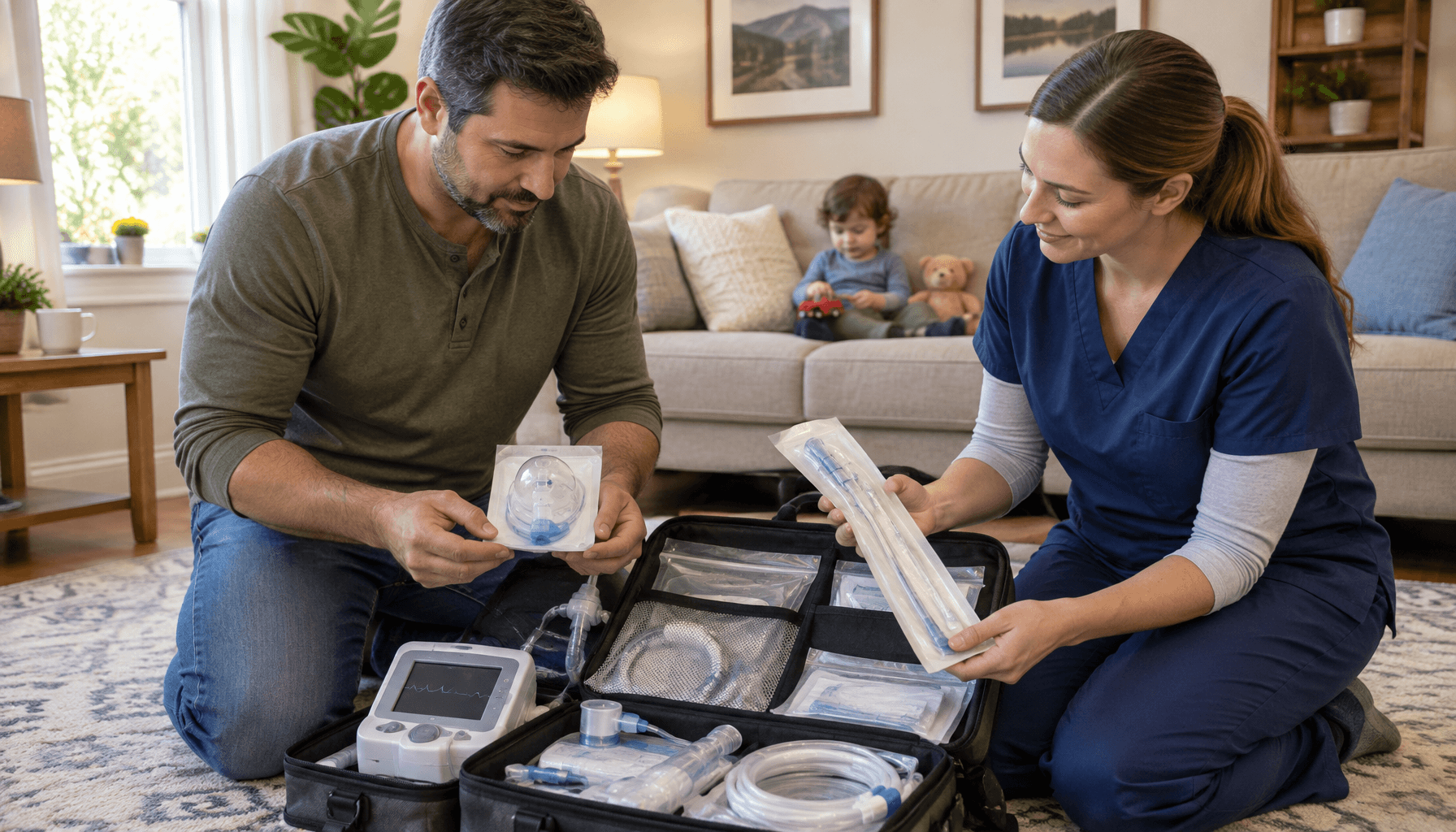
Your hospital team will teach you how to handle an accidental decannulation or a plugged trach, and you should practice those steps until they feel familiar. The equipment side is simple: keep a spare trach in your child's current size, plus one size smaller, along with ties, lubricant, scissors, a suction setup, and a manual resuscitation bag if your child's team has prescribed one. Keep one set at the care station and one in the go-bag, and make sure every adult in the house knows where they are.

Pack a Go-Bag That Never Gets Unpacked
Hospital trips with a trach or vent child rarely come with warning. A go-bag that stays packed by the door saves precious minutes. Families usually include:
- The emergency sheet and copies of the latest orders
- Spare trachs (current size and one smaller), ties, and suction catheters
- A portable suction machine and charger
- The manual resuscitation bag, if prescribed
- Pulse oximeter
- Feeding supplies and a day of formula, if your child is tube fed
- Medications for at least a day
- Chargers for every portable device
After every trip, restock the bag before you put it away.
Plan for Power Outages
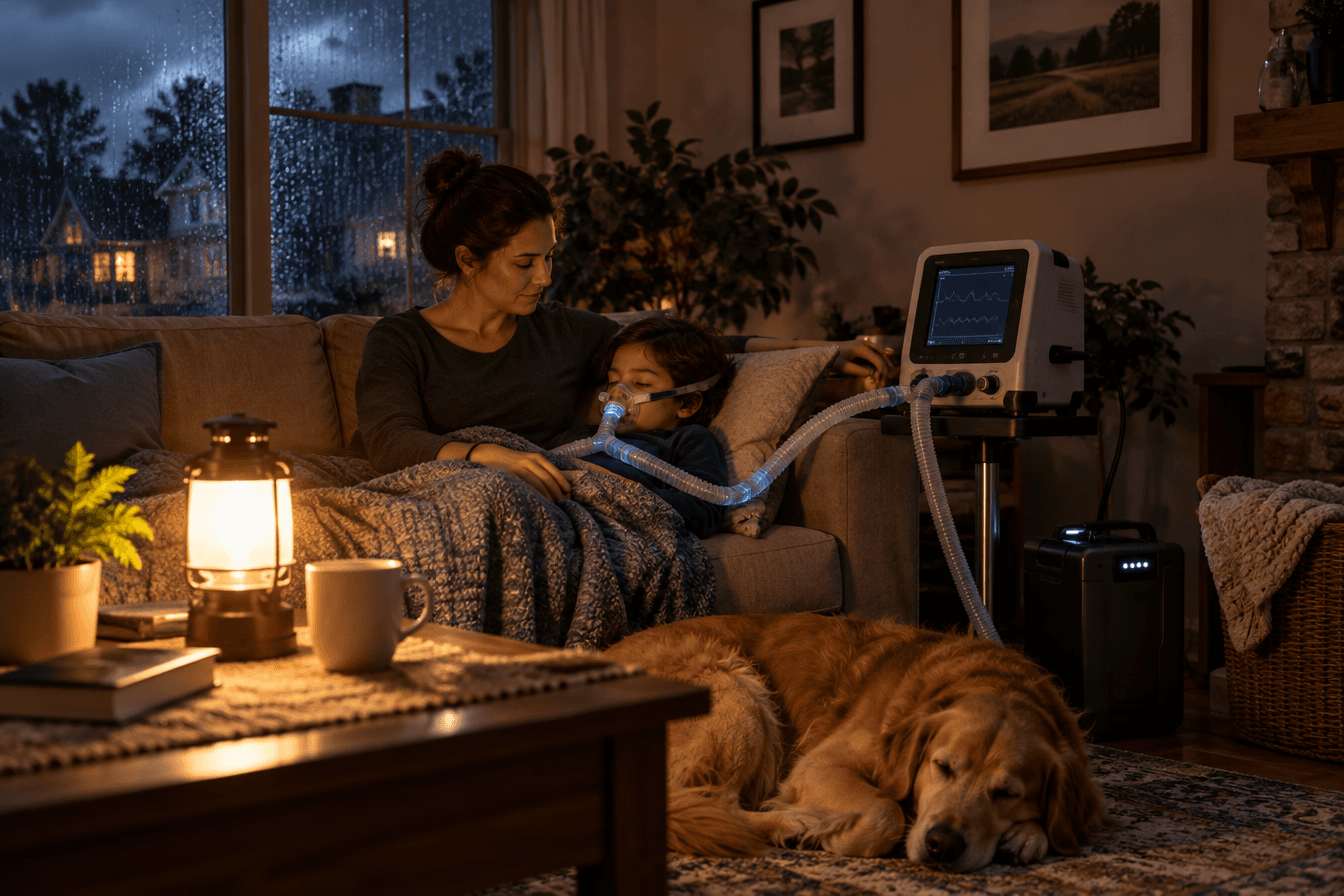
Georgia storms knock out power, and a ventilator, suction machine, and oxygen concentrator all depend on it. A few calls now make a big difference later:
- Call your power company. Ask about registering a household member who depends on life-support or medical equipment. These programs vary and do not guarantee that your power will be restored first, but they let the company know your home has medical needs.
- Know your battery times. Ask your DME company how long the ventilator's internal and external batteries last and how long the portable suction runs on a charge. Keep everything charged.
- Have a backup plan for oxygen. If your child uses an oxygen concentrator, ask the DME company about backup tanks.
- Decide where you will go. If an outage will outlast your batteries, know in advance whether you will go to a relative's home with power or to the hospital.
Tell the People Who Respond
Ask your county's 911 center whether it can note at your address that a child on medical equipment lives there. Let your local fire station know too. Some families also keep a short note on the front door or refrigerator for first responders that points to the emergency sheet.
For planned trips, the GAPP manual notes that ambulance transportation can be requested for children who are extremely medically fragile, such as children on a ventilator, with prior approval through Medicaid. Your nursing agency can help you understand the options for appointments.

Make Sure More Than One Person Is Trained
The emergency plan only works if the person in the room can carry it out. Before discharge, ask whether a second adult in your home can complete the hospital's trach and ventilator training. Your nurses learn your child's plan too, but no schedule covers every hour of every day.
Our guide to bringing your child home with a trach covers training and the rest of the discharge checklist.
Where Your Nursing Agency Fits
A good nursing agency helps you keep the plan current. At Heart and Soul Healthcare, our nurses are trained in trach care, suctioning, trach changes, and ventilator management, and they learn each child's emergency plan, including what to do for an accidental decannulation or equipment failure. A registered nurse oversees every child's care, with on-call support when questions come up after hours.
We care for children with trachs and ventilators through the Georgia Pediatric Program (GAPP) across metro Atlanta and surrounding counties, and families elsewhere in Georgia are welcome to reach out. Learn more about our pediatric trach and ventilator nursing, or start a referral below.
Ready to Get Started?
Contact Heart and Soul Healthcare today to learn how our programs can support you or your loved one.
Related Articles
Continue reading about GAPP